The Phone That Isn’t a Phone — Quantum Governance and the End of Flat Browsing
What if your phone wasn’t a portal into the internet — but an environment you inhabit? Quantum Governance replaces the URL bar with a spatial universe, the app grid with a node graph, and conventional carrier dependency with sovereign spatial navigation.
Pick up your phone. Look at the screen. What you’re seeing is a grid of icons over a flat image, with a tiny URL bar tucked into a browser somewhere underneath. Forty years of the internet, and the interface is still fundamentally a list of names you type to go to a place you can’t see.
That’s not a phone. That’s a directory with a SIM card.
The phone you actually want — the one Quantum Governance points toward — isn’t a portal into the internet. It’s an environment you inhabit. The grid becomes a graph. The URL bar becomes a coordinate. The browser becomes a vehicle. And the carrier becomes infrastructure you don’t have to ask permission from to navigate.
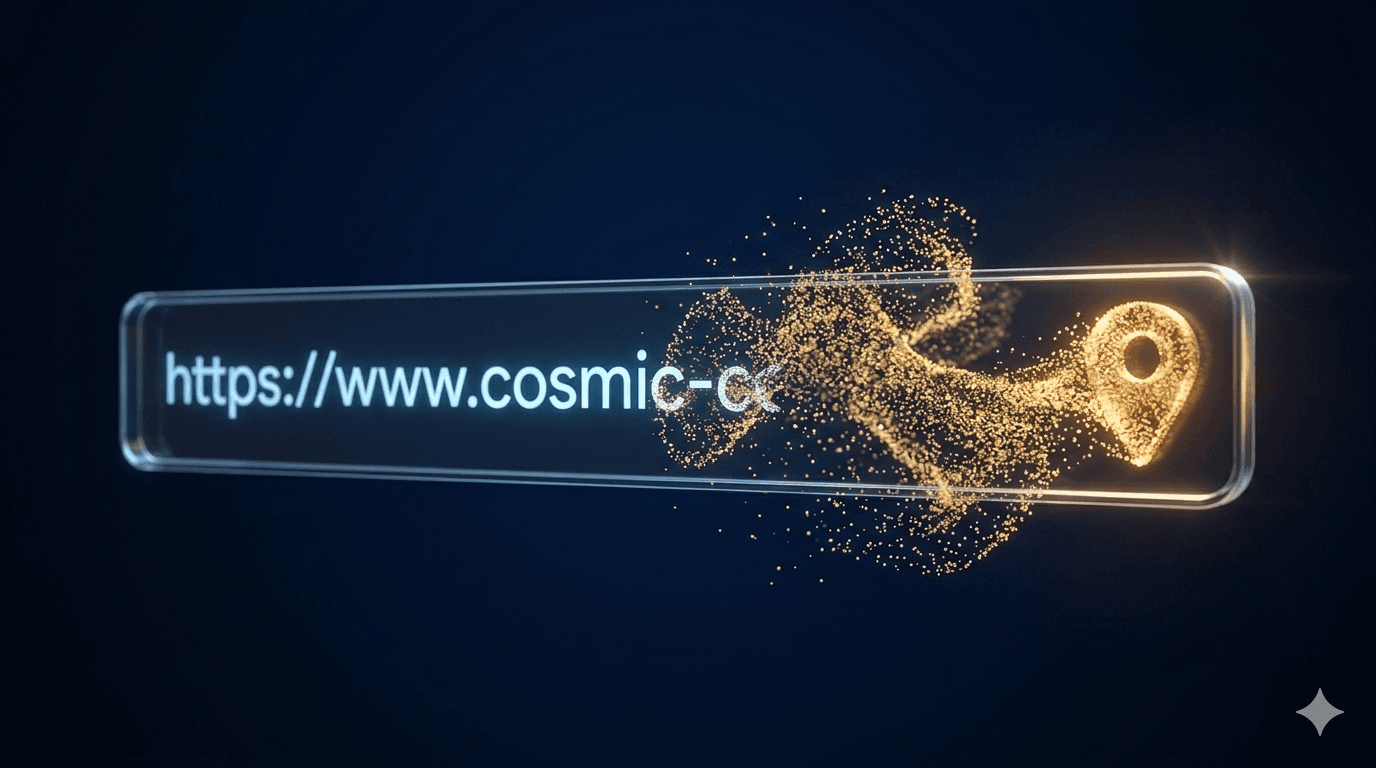
The URL Bar Is a Confession
Every URL is a confession of failure. It admits the system can’t describe where you’re going — only what string of characters happens to point there. “https://example.com/dashboard/v2/user/47812/settings/privacy” isn’t a place. It’s a path through somebody’s database, exposed to the user because the system never built a real address space.
Compare that to a real coordinate system. Latitude and longitude don’t describe the path you took to a location — they describe the location itself. You can be there from any direction. The address is intrinsic to the place. The path is just one way among many.
Quantum Governance takes this seriously. A governed digital space has structural addresses, not URLs. Every node in the graph has a position defined by its relationships and obligations — not a string crafted by whoever happened to register the domain. Two systems pointing at the same node arrive at the same place because the place exists, not because the string matches.
This sounds abstract until you live in it. Then the URL bar starts to feel like the address book in a 1970s Rolodex — a workable hack from before we had real infrastructure.
The App Grid Is a Filing Cabinet
The grid of icons on your home screen treats every application as a separate folder, sealed off from every other folder. Each app has its own data, its own authentication, its own context. Switching between them costs you state — and that cost is paid by you, the human, doing the work of stitching context across silos.
This isn’t how intelligence works. Intelligence operates in a connected substrate where related concepts are structurally linked, not stored in separate boxes. When you remember a friend’s birthday, you don’t open a “calendar app” in your head and look it up. The fact lives in a graph of associations — friend, history, season, gift you bought last year, restaurant you went to.
A governed device should mirror that. Apps should be nodes in a graph, not folders in a grid. Switching between “calendar” and “messages” shouldn’t reset your context — the system should know that the meeting at 3pm and the message thread about the meeting are the same node viewed from two angles. The intelligence isn’t in either app. It’s in the graph.
This is what we mean by spatial navigation: the screen stops being a window into a single application and starts being a viewport onto a coherent space. You don’t “open apps.” You move through a structured environment where capability shows up where it’s relevant.
Carrier Sovereignty
The current model assumes you rent your connectivity from a carrier, and the carrier decides what’s allowed through. This is so deeply baked into the device that we forget to question it. But it’s a governance choice, not a physical necessity.
A sovereign spatial device treats connectivity as a substrate, not a permission. The device has its own identity. The user has their own identity. The spaces being navigated have their own identity. Carriers provide bandwidth — they don’t sit in the middle as the gatekeeper of every interaction.
This isn’t anti-carrier. It’s post-carrier. The carrier becomes infrastructure the way roads are infrastructure: you pay for capacity, not permission. Where you go and what you do there isn’t the carrier’s business, structurally. Sovereignty over the device means sovereignty over the experience the device produces — and that requires the governance layer to live with the user, not with the access provider.
What “Quantum” Adds
Why call this Quantum Governance and not just “spatial computing”? Because the relationships in the graph aren’t classical. They’re entangled.
When you change a setting in one node — say, your privacy preference for sharing location with health-related services — it doesn’t just update one app. It propagates through every entangled relationship in the graph. The fitness tracker, the calendar, the messaging app, the family group — every node that holds a relationship with the privacy decision sees the new state instantly. Not because they’re subscribed to a notification feed. Because the graph’s structural integrity requires it.
This is the engineering promise underneath Quanta Systems Part 1: intelligence is a property of the system. Quantum Governance makes that property visible at the device level. The system doesn’t guess what you’d want consistent across apps. The graph guarantees consistency by structure.
What This Looks Like in Practice
The first generation of this won’t look like science fiction. It’ll look like an unusually coherent operating environment. You’ll notice that your settings actually mean what they say across applications. You’ll notice that switching contexts doesn’t cost you state. You’ll notice that addresses for things in the system feel structural — not like URLs.
You’ll also notice what’s missing. The pop-up cookie banners. The “we’d like to track you across apps” prompts. The five different versions of your profile that don’t agree with each other. Those aren’t features the user wants — they’re symptoms of an architecture that never had governance built in. When governance is structural, the friction disappears, because the requirement is satisfied by the graph instead of demanded from the user.
The device you carry today is a remarkable piece of hardware running a fundamentally 1990s software model: directories, browsers, files, apps. The phone that isn’t a phone runs a different model entirely. It treats the digital as a place. It treats you as a sovereign navigator through that place. And it treats the relationships between concepts as the structural reality, not the metadata.
That’s what happens when Quanta intelligence meets a device in your pocket.
Next: Part 5 — Intelligence Without a Prompt. What does it mean to build AI that doesn’t start with a text box?
You’re reading 4 of 5.
Get notified when the next article drops. No marketing — one email per new article, unsubscribe any time.